



Chevy Colorado Towing Capacity Explained
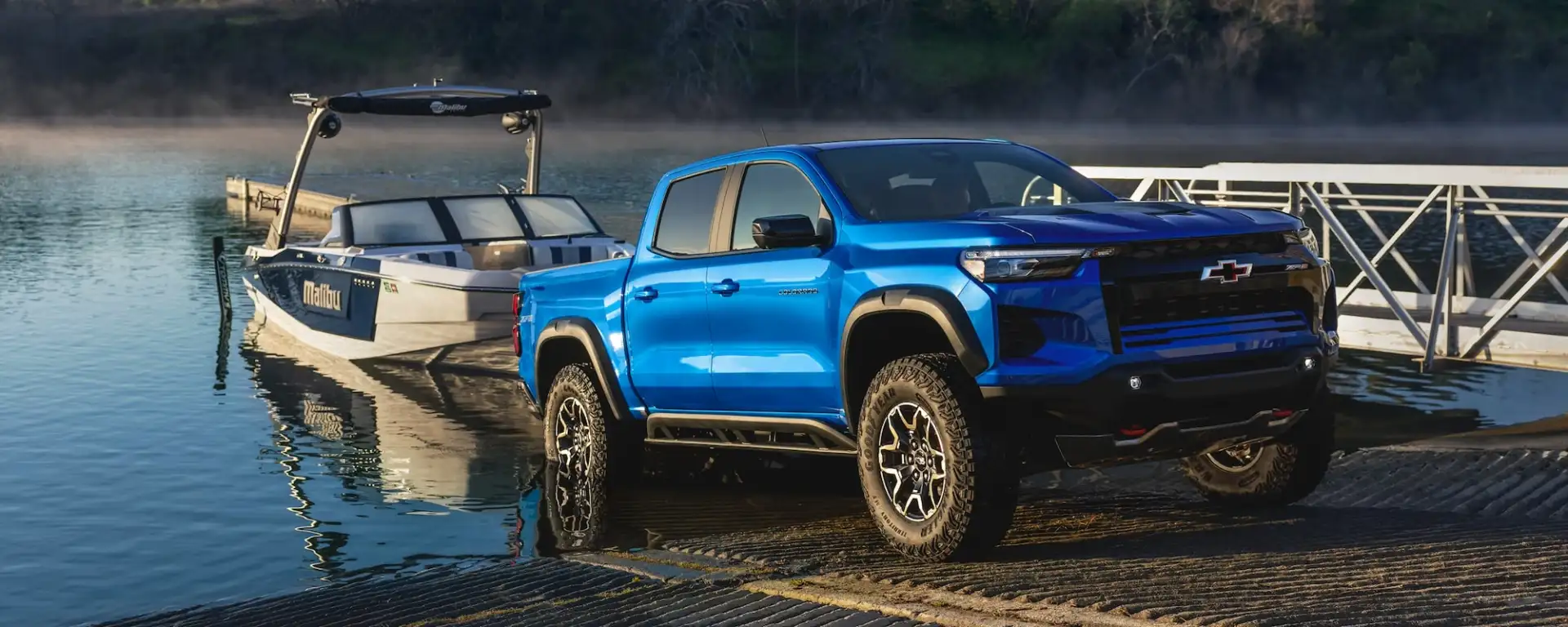
A midsize truck can be the right answer when a full-size pickup feels like more truck than your daily routine requires. The Chevy Colorado towing capacity reaches a maximum of 7,700 pounds when properly equipped, giving many Northern Illinois drivers enough capability for a travel trailer, fishing boat, utility trailer, or side-by-side without moving up to a Silverado.
That maximum number is useful, but it is not the number every Colorado can tow. Cab configuration, bed length, drivetrain, trailer equipment, passengers, cargo, and the specific truck’s ratings all matter. The better question is not simply, “What can a Colorado tow?” It is, “What do I plan to tow, and which Colorado is built for that job?”
Chevy Colorado Towing Capacity: Up to 7,700 Pounds
The current-generation Chevrolet Colorado is powered by a turbocharged 2.7L TurboMax engine designed to deliver strong low-end torque, which is especially helpful when pulling away from a stop with a loaded trailer. When equipped for maximum towing, the Colorado can tow up to 7,700 pounds.
For many owners around Gurnee, Mundelein, and Waukegan, that range covers the weekend jobs and recreational plans that make a truck worthwhile. A compact camper, a pair of personal watercraft, many single-axle equipment trailers, and a moderate-size boat may all fall within the Colorado’s capabilities.
Still, a trailer’s listed dry weight is not its real travel weight. Water, fuel, batteries, camping gear, coolers, tools, and cargo can add up quickly. A travel trailer that appears comfortably under the limit on a brochure can get much closer once it is ready for the road.
Towing capacity is not the only rating to check
Maximum towing is just one part of safe towing. The truck’s payload rating is equally important because tongue weight counts as cargo in the truck. So do people in the cabin, a bed full of gear, accessories, and any aftermarket equipment.
As a general rule, conventional trailer tongue weight often lands around 10% to 15% of the loaded trailer weight. A 6,000-pound loaded trailer could place roughly 600 to 900 pounds on the Colorado. Add four passengers and weekend supplies, and payload can become the limiting factor before the advertised towing maximum does.
For that reason, always check the specific vehicle’s tire and loading information label and owner’s manual. The ratings assigned to the truck in front of you are more useful than a broad model-line maximum.
What You Need for Maximum Colorado Towing
A Colorado that is suited to towing needs more than a trailer hitch. The right factory equipment helps the truck manage the added load with more confidence and control.
The available Trailering Package is a major consideration for shoppers who expect to tow regularly. Depending on the model year and configuration, this package can include the receiver hitch, seven-pin connector, hitch guidance technology, and an integrated trailer brake controller. These features make setup easier, but more importantly, they help support controlled braking and trailer monitoring.
An integrated brake controller is particularly valuable with larger trailers equipped with electric brakes. Rather than relying only on the truck’s brakes, it helps apply the trailer brakes in coordination with the vehicle. Properly adjusted trailer brakes can make a noticeable difference on busy roads, downhill grades, and sudden stops.
Four-wheel drive can also be useful, though it does not automatically increase every truck’s tow rating. It can provide added traction on wet boat ramps, gravel campsites, snowy driveways, and uneven launch areas. If most of your towing happens on paved roads in fair weather, a two-wheel-drive configuration may be all you need. The best choice depends on where the trailer is going, not just where it is parked.
Which Colorado Is Best for Your Trailer?
The Colorado lineup offers different trims and configurations, and towing needs should be part of the comparison from the start. A truck selected primarily for off-road hardware, for example, may have a different towing rating than a configuration intended for maximum trailering. That does not make one better than the other. It means the mission matters.
If your trailer is a light utility trailer used for home projects in Lake County, most Colorado configurations may provide more than enough strength. You can focus on the cab, bed, comfort features, and technology that fit your everyday life.
If you are shopping for a camper or a heavier boat, start with the trailer’s loaded weight, not its empty weight. Then account for passengers, cargo, hitch equipment, and tongue weight. Leaving a reasonable cushion below the truck’s maximum ratings is often smarter than planning around the absolute limit for every trip.
For buyers who regularly tow near the upper end of the Colorado’s capability, a Silverado may be worth comparing as well. A full-size truck can offer higher towing and payload limits, a larger cabin in certain configurations, and more room for future needs. On the other hand, the Colorado is easier to park, more maneuverable around town, and can be a better fit for drivers who tow occasionally rather than every week.
Smart Towing Habits for Illinois Drivers
The right equipment is only half the equation. Loading and setup determine how stable the combination feels on the road.
Place heavier cargo low and near the trailer axle, then secure it so weight cannot shift during a turn or stop. Keep the trailer balanced from side to side, and avoid loading too much weight behind the axle. A tail-heavy trailer can sway, while too much weight on the hitch can overload the rear of the truck.
Before leaving, confirm that the coupler is locked, safety chains are crossed beneath the tongue, lights and turn signals work, and trailer tires are properly inflated. Check the breakaway cable as well. These small steps take only a few minutes and can prevent a frustrating or unsafe trip.
On the road, give yourself more following distance, brake earlier, and make wider turns. Towing also changes how the truck responds to crosswinds and passing semis, especially on open stretches near the lake or interstate. Use Tow/Haul mode when equipped. It can adjust transmission behavior to help the Colorado hold gears more effectively and reduce unnecessary shifting when pulling a load.
Do not overlook trailer maintenance
A well-matched truck cannot compensate for a neglected trailer. Inspect trailer tires for age and cracking, test the lights, verify brake operation, and check wheel bearings according to the trailer manufacturer’s schedule. Many towing concerns that feel like a truck problem begin with tire pressure, uneven loading, or brake issues at the trailer.
If your Colorado will tow season after season, routine service matters too. Oil changes, brake inspections, tire condition, cooling-system checks, and transmission service recommendations all deserve attention. The service team can help review a maintenance plan based on how often and how heavily you tow.
New or Used Colorado for Towing?
A new Colorado gives you access to the latest available trailering technology and the ability to select the configuration that matches your trailer from day one. It can be the straightforward choice for someone who knows exactly what they need to haul.
A used Colorado can also be an excellent value, particularly when its original equipment and condition are carefully verified. For any used truck, confirm the VIN-specific towing information, look for the correct hitch and wiring equipment, inspect the receiver for wear or damage, and review service history. A CarBravo certified used vehicle may appeal to shoppers who want additional confidence in a pre-owned option.
Whether you are hauling a boat toward Fox Lake, taking a camper out for the weekend, or bringing home materials for a project, the right Colorado is the one that fits your real trailer weight and your everyday driving needs. Browse new and used Chevrolet truck inventory, speak with a product specialist about the equipment on a specific vehicle, and schedule service before your next towing season.
Frequently Asked Questions
How do I find the exact towing capacity of a specific Colorado?
Start with the truck’s VIN-specific information, the owner’s manual, and the tire and loading information label on the driver’s door jamb, which shows payload. Trim, drivetrain, and installed trailering equipment all affect the final rating. The Libertyville Chevrolet team can look up the ratings for any new or used Colorado on the lot so you know what that exact truck is built to handle.
Do I need a weight-distributing hitch to tow with a Colorado?
It depends on the trailer and the hitch ratings listed in the owner’s manual. Heavier conventional trailers with significant tongue weight may call for a weight-distributing hitch to help level the truck and trailer and improve steering and braking feel. Check the owner’s manual and the hitch manufacturer’s guidance, and ask the Libertyville Chevrolet parts and service team about the right setup.
Can I add a factory trailering package to a Colorado after purchase?
Some trailering components, such as a receiver hitch and wiring harness, can be added later as genuine Chevrolet accessories, while items like an integrated trailer brake controller may depend on how the truck was built. Adding equipment does not raise the truck’s factory ratings. Talk with the Libertyville Chevrolet parts department about which components fit your specific Colorado.
How should I prepare a Colorado for towing season in northern Illinois?
Before spring boat launches or summer camping trips, schedule an inspection of brakes, tires, cooling system, and fluids, and test the trailer lights and brake controller. Winter road salt can corrode hitch hardware, wiring connectors, and trailer brakes, so check them closely after a Lake County winter. Libertyville Chevrolet service can review your truck before the first long trip.
0 comment(s) so far on Chevy Colorado Towing Capacity Explained